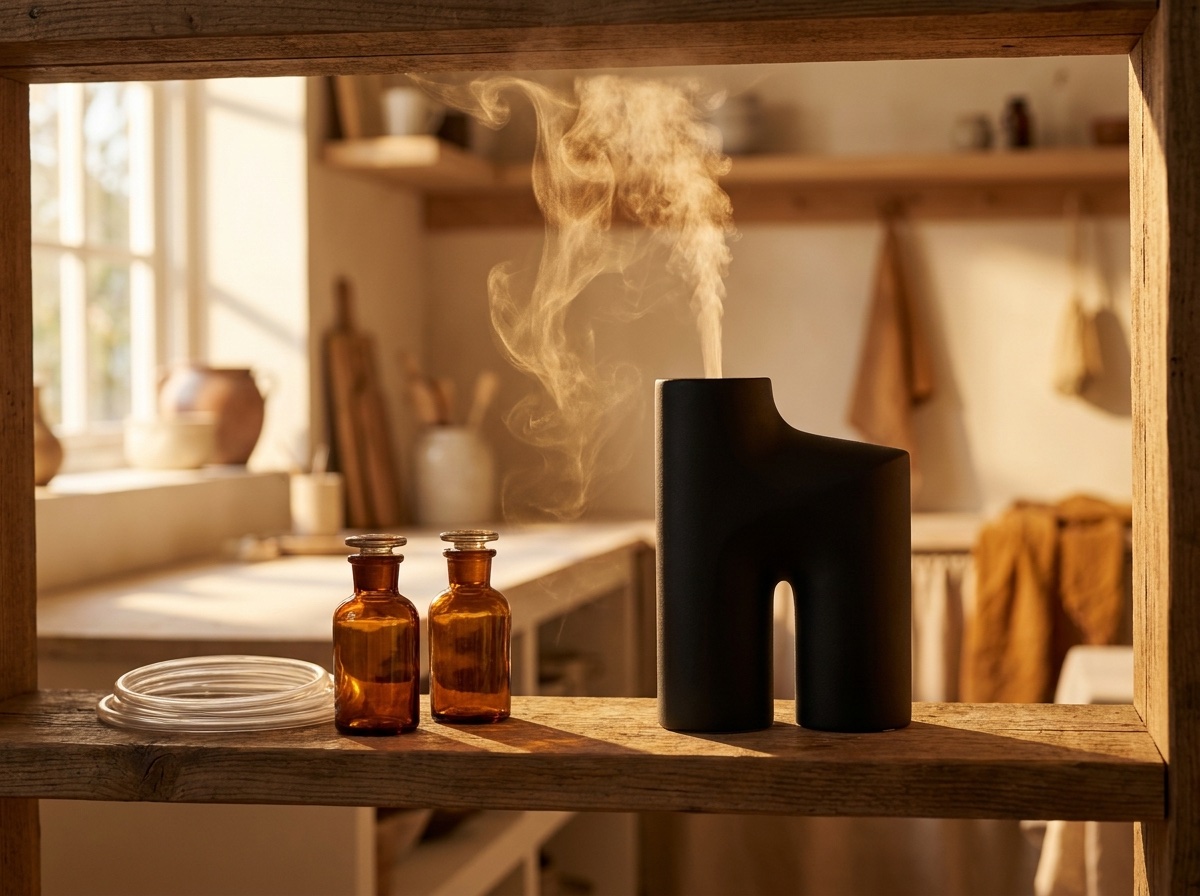
The fragrance is the part everyone wants to talk about, and it’s the part that matters least to whether the programme works. Choosing the scent is a pleasant afternoon. Delivering that scent, at the right strength, in every corner of the space, consistently, two years from now, is the actual job, and it’s an operations job long before it’s a creative one.
Naim Cetinturk makes a quietly important move in his work on store scent, framing it as a product in its own right rather than a decorative afterthought. That reframing changes who should be in the room. A product has specifications, supply, maintenance, and a cost of ownership over time. Treat scent that way and a different set of questions comes forward, the ones facilities and procurement teams ask by instinct and creative pitches tend to skip.
Consider what actually decides whether a space smells the way it’s meant to on an ordinary Tuesday, months after launch. The concentration of the formula, which drives both how it reads and how often the system has to run. The diffusion hardware, matched to the volume and airflow of the specific building. The calibration, zone by zone, so the atrium and the lift lobby and the quiet corner each get what they need. The service schedule that keeps all of it stable as the fragrance depletes and the seasons turn. None of that is a fragrance decision. All of it decides the outcome.
This is also where the real cost lives, and where it’s most often hidden. A richer, higher-concentration formula lasts longer in the air but costs more per litre and can change the servicing rhythm. A cheaper install that under-scents a large space quietly wastes the whole investment, because a scent nobody can reliably detect is a scent that isn’t working. The sticker price of the fragrance tells you very little about the cost of the outcome.
The honest pricing conversation happens over years, not at signing. A scent programme is a running system with refills, servicing and recalibration, closer to maintaining a piece of building plant than to buying a candle. Suppliers who quote only the install are quoting the cheapest and least important number. Ask instead what it costs to keep the space smelling right in year two and year three, because that’s the figure that decides whether the programme was worth starting.
The systematic review by Justina Rimkute, Caroline Moraes and Carlos Ferreira, surveying the field in the International Journal of Consumer Studies, is a reminder of why the operational discipline matters. The effects scent can produce are real but sensitive to conditions. If the delivery is inconsistent, so is the effect. You can commission the perfect accord and still get nothing, because the thing the research measures, a stable, appropriate scent in the space, was never actually maintained.
The question behind the question
So the useful thing to interrogate in any proposal isn’t the fragrance library. It’s the ownership of the whole chain. Who specifies the system for this building’s architecture? Who installs and calibrates it in the actual space rather than on paper? Who keeps it running, and who’s accountable when the scent drifts or fades? If those answers point to three different companies each hoping another coordinates them, you already know where it will fail.
A diffusion system is only as good as the scent it carries. A signature scent is only as good as the system delivering it, unchanged, long after the launch photos. Both halves have to be owned, or the gap between them becomes the customer’s problem, felt as a space that smelled wonderful once and now smells of nothing in particular.
Buy the outcome, not the oil. The fragrance is the easy, enjoyable decision. The reason it works, or doesn’t, is everything around it that nobody put on the mood board.